

Hello from the TBM Council’s Research and standards team! As part of our commitment to the community in 2026, we are beginning an ongoing series of data snapshot reports from our monthly pulse surveys. These short surveys often target important topics in TBM practice, and often receive excellent feedback and responses. Since you’ve taken the time to respond to the survey, we want to offer a breakdown and analysis of what we see in that data.
Let’s dive in:
What we asked & what you said
Proactive insight is one of the prime ways for TBM practices to demonstrate their value – and a great indicator of maturity. But TBM practices at different levels in their journey experience different challenges – and require different approaches to that challenge.
We asked Practitioners the following questions:
1. How often does your TBM practice use analytics to proactively drive decision-making annually?
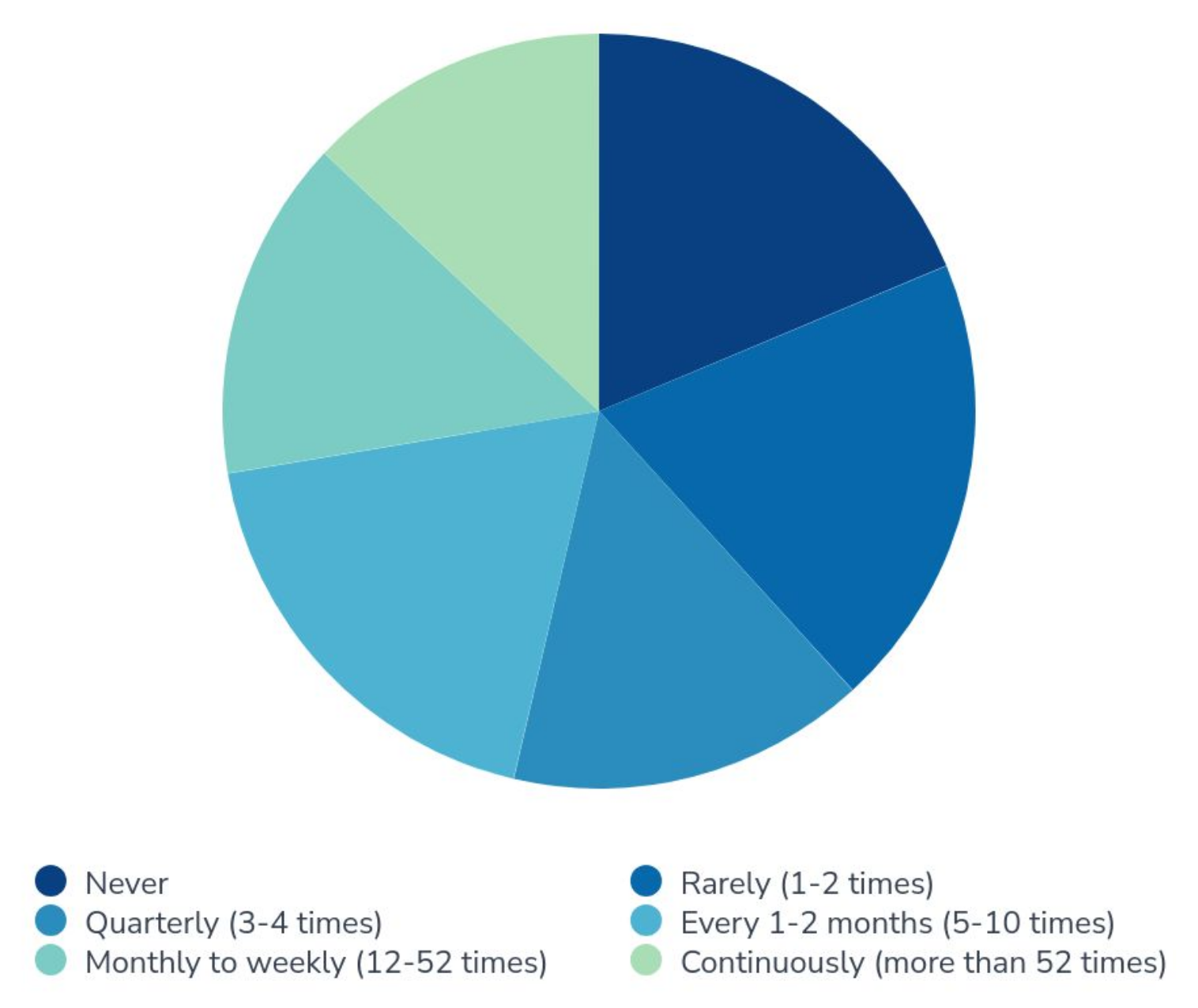
The breakdown from this question is very evenly split across all the options. That’s great – it gives us a wide range of samples from types of maturity. For simplicity, we’ll group them into three categories: high frequency (12 or more times), medium frequency (4-10 times), and low frequency (3 or fewer times, including never).
We know that proactive reporting is a good indicator of maturity in TBM1, and frequent, proactive reporting is something that high-performing TBM practices are able to do to showcase their value to the organization regularly.
We also asked:
2. Which of the following is the biggest challenge to your TBM practice being proactive more frequently?
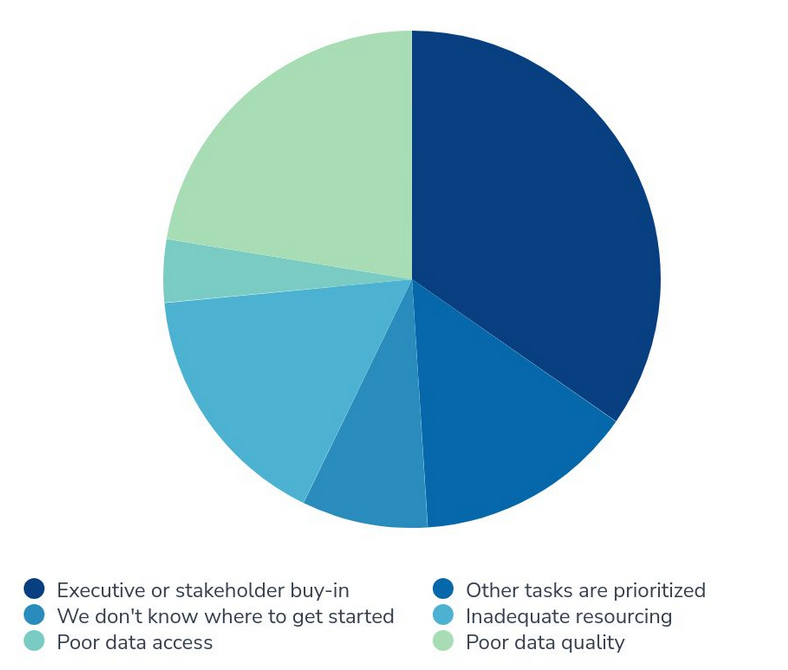
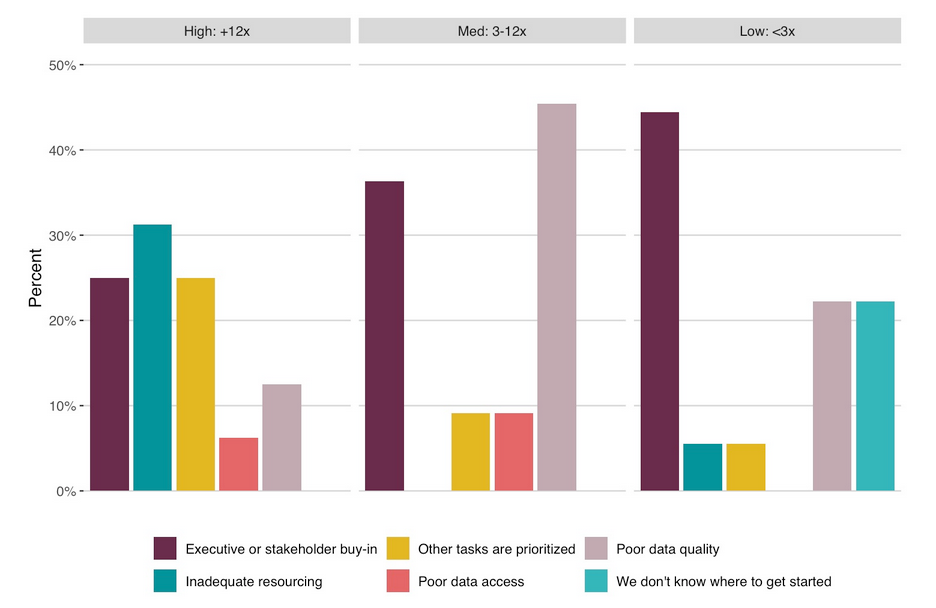
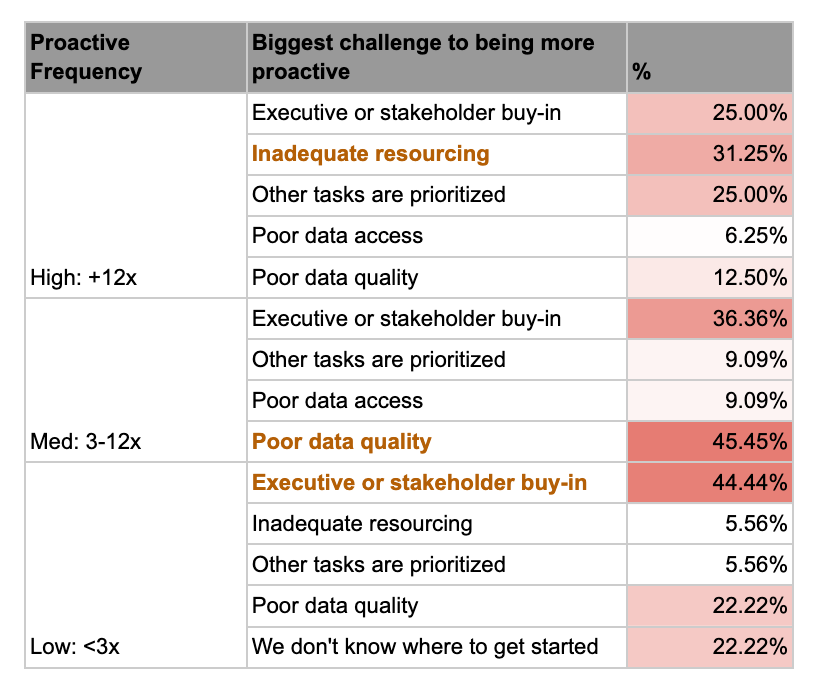
As you can see, there are two runaway winners: executive or stakeholder buy-in (35%) and poor data quality (22.4%). However, when we look at the ‘challenges’ for each of our three ‘frequency of proactive’ categories, we see some interesting trends.
Conclusions
Different challenges across the lifecycle:
Low-frequency practices cite poor executive buy-in and not knowing where to get started. Try these resources to provide a road map for success, and keeping executives bought in from day one.
Medium-frequency practices cite poor data quality as a blocker. For data quality and access, try jump-starting a virtuous data cycle to enable data improvements and manage imperfect data.
High-frequency practices cite resourcing concerns – they don’t have enough bodies to do more! However, even the most high-performing organization still takes time to manage executive buy-in and task prioritization.
Executive by-in is a challenge across the board:
Executives need to be bought-in to not only enable teams to go diving for insights, but also to continually enable a platform for those insights to be shared. Teams who lose sight of that risk being siloed away from access and effective impact.
Keep your executives engaged, no matter what stage of TBM you’re in.
Shared Governance and collaborative committees can involve executives and continually message the value that TBM provides.
Focus on directional insight and iterative updates vs. getting a perfect narrative right away to keep Executives engaged with frequent updates to keep TBM top-of-mind – and iterative/directional updates allow you to tackle data quality issues while also proving value.


